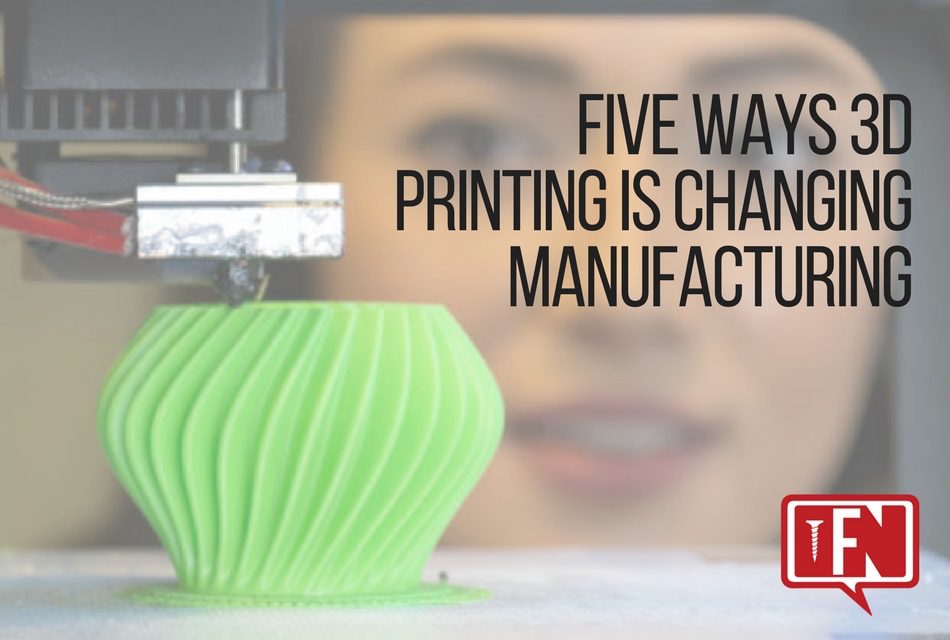
As 3D printing is becoming a major part in manufacturing in production. No longer just for prototyping, the industry has to make adjustments for this shift.
Today only 0.01% of all manufacturing output is 3-D printed. Instead, the technology is predominantly used to produce prototypes, which enables companies to transform and tweak product models much more easily and cost-effectively than by using traditional manufacturing methods.
But 3-D printing is beginning to make small yet significant inroads that are taking it beyond prototyping and onto the manufacturing floor and production process. The industries making this happen are diverse. For example, aircraft manufacturer Airbus is using 3-D-printed parts in its aircraft, and a full 98% of hearing aids produced worldwide are now made using 3-D printers, custom-crafted for each user’s unique ear shape. Multiple companies host websites in which children can custom-make toys that are 3-D printed and shipped to their doors. These uses of 3D printing have boosted the market’s value to nearly $9 billion this year. Analysts predict that value to rise to $30 billion by 2022.
For that to happen, though, users of 3D printing will have to overcome current barriers to using additive manufacturing to produce finished parts. That may prove difficult, given some of the problems associated with current 3D printing technology, such as print consistency, reliability of material and build properties, limited choice of materials, expensive raw materials, and others.
Click Here to Read the Full Article
3D Printing / Additive Manufacturing, The Fastener Museum