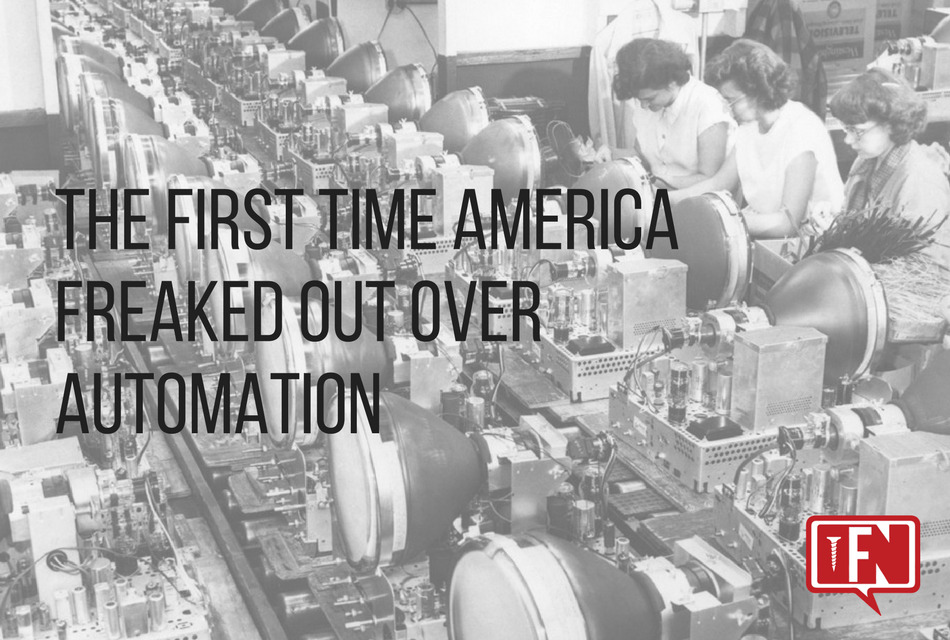
In 1958, America found itself in the midst of its worst economic slump since the Great Depression. There had been other recessions, from 1948 to 1949 and from 1953 to 1954, but they were less severe. The latest downturn, which began in the summer of 1957, turned serious by winter. In January 1958, Life magazine visited Peoria, Illinois, and found the mood there to be gloomy. Caterpillar, the heavy equipment maker and the big provider of jobs in town, had already laid off 6,000 workers and cut back to a 4-day week. “Trouble is already here for some people,” said one Caterpillar worker. “But it’s under the surface for everybody.”
As painful as the recession was, to many it was all part of the natural business cycle: a chance for manufacturers to pare down inventories that had become bloated earlier in the decade, to pull back on investments that had gotten overbuilt and to adapt to a shrinking export market. But some suspected that something else was going on, something structural and not just cyclical. The Nation termed it an “Automation Depression.” “We are stumbling blindly into the automation era with no concept or plan to reconcile the need of workers for income and the need of business for cost-cutting and worker-displacing innovations,” the magazine said in November 1958.
Click Here to Read the Full Article
Technology, The Fastener Museum