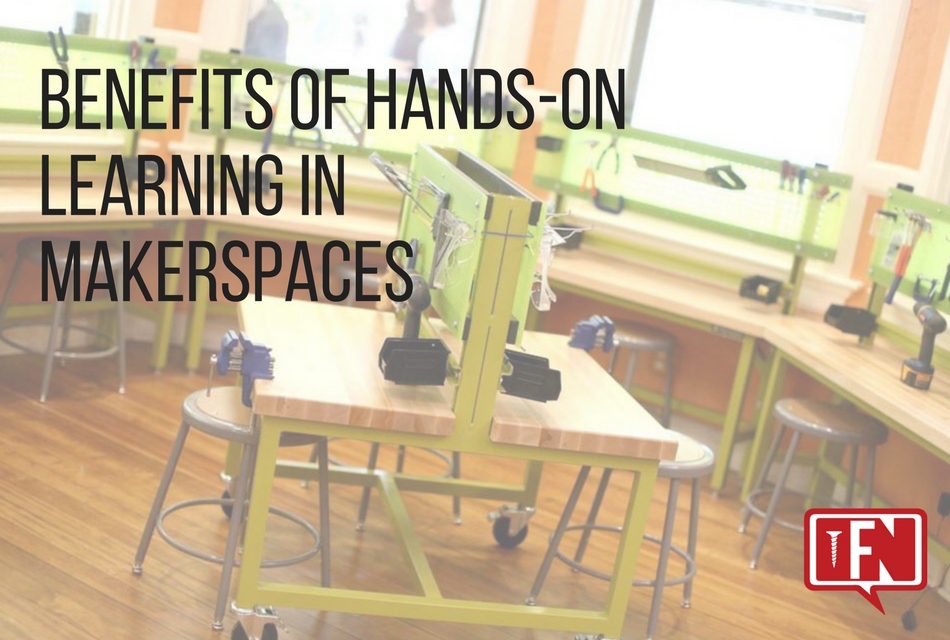
For those of us working in the manufacturing industry, the concept of hands-on learning is a natural way to investigate problems and come up with creative solutions. But for many, hands-on learning has become the exception rather than the rule. Fortunately, the increasing number of Makerspaces provides exciting new opportunities for hands-on learning, problem-solving, and creative experimentation.
If you don’t have a lot of experience making things by hanld, the habits and vocabulary of those of us with careers in the world of product development, engineering and design, manufacturing and production or science laboratories might seem very foreign indeed.
You may notice a product engineer or a lab manager carrying around a small notebook or doodling on a napkin during dinner to capture ideas. It’s likely you’ll overhear references to things like concept sketches and ideation, hot glue guns and foam core, CNC machines, STL models, working prototypes, hacked hardware made from breadboards and Arduino shields, software kludges, and frankencode served up on a Raspberry Pi.
In the world of the creative maker, these terms (and many more) are just part of a perfectly normal daily conversation. But if it sounds to you like creative makers are using a foreign language designed to isolate themselves into an exclusive club, you’re wrong!
Click Here to Read the Full Article
Makers, The Fastener Museum